What to Expect Before Your First Bikini Competition

Your first bikini competition can feel exciting and overwhelming. This article explains what to expect before stepping on stage, including prep structure, posing, body changes, show-day details, and why honest coaching matters before choosing a show.

Your first bikini competition can feel exciting, intimidating, and confusing all at the same time. One minute you’re looking at suits, heels, stage photos, and show dates, and the next minute you’re wondering if you’re even close to ready.

That’s normal.

Most first-time bikini competitors don’t fully know what they’re getting into at the beginning. They may understand that prep involves dieting, training, cardio, posing, and getting lean, but they don’t always understand how much structure, patience, feedback, and decision-making goes into the full process.

A bikini competition is not just a weight-loss goal. It’s a judged physique sport, and that means the final look matters. Your shape, conditioning, posing, presentation, confidence, suit, tan, hair, makeup, and stage presence all play a role in how you’re seen on show day.

That doesn’t mean you need to be perfect before you start. It doesn’t mean you need to know everything. But it does mean you should understand what to expect before you commit to a show, because the more prepared you are going in, the less likely you are to panic when prep starts feeling real.

Your First Prep Will Be More Structured Than Regular Dieting

A lot of first-time competitors come into prep thinking it’s just a stricter version of dieting. In some ways, yes, it is more structured, but contest prep is not the same as a regular fat-loss phase.

In a normal diet, the goal is usually to lose weight, look better, feel better, or improve health markers. In bikini prep, the goal is to bring a specific look to stage by a specific date. That changes how decisions are made.

Your nutrition will usually become more precise. Your training has to support muscle retention and shape. Cardio and steps may increase over time. Your coach will likely be watching your weight trends, progress photos, digestion, energy, training performance, cycle changes, stress, and how your body is visually responding.

This is where first-timers can get overwhelmed, because prep is not just “eat less and move more.” It’s a process of adjusting variables while trying to preserve the look you’ve built. You’re not just trying to get smaller. You’re trying to get lean enough while still keeping shape, fullness, balance, and performance as much as possible.

That’s why guessing your way through prep can get messy fast. The more competitive the goal, the more important the details become.

You’ll Need to Practice Posing Earlier Than You Think

One of the biggest surprises for first-time bikini competitors is how much posing matters.

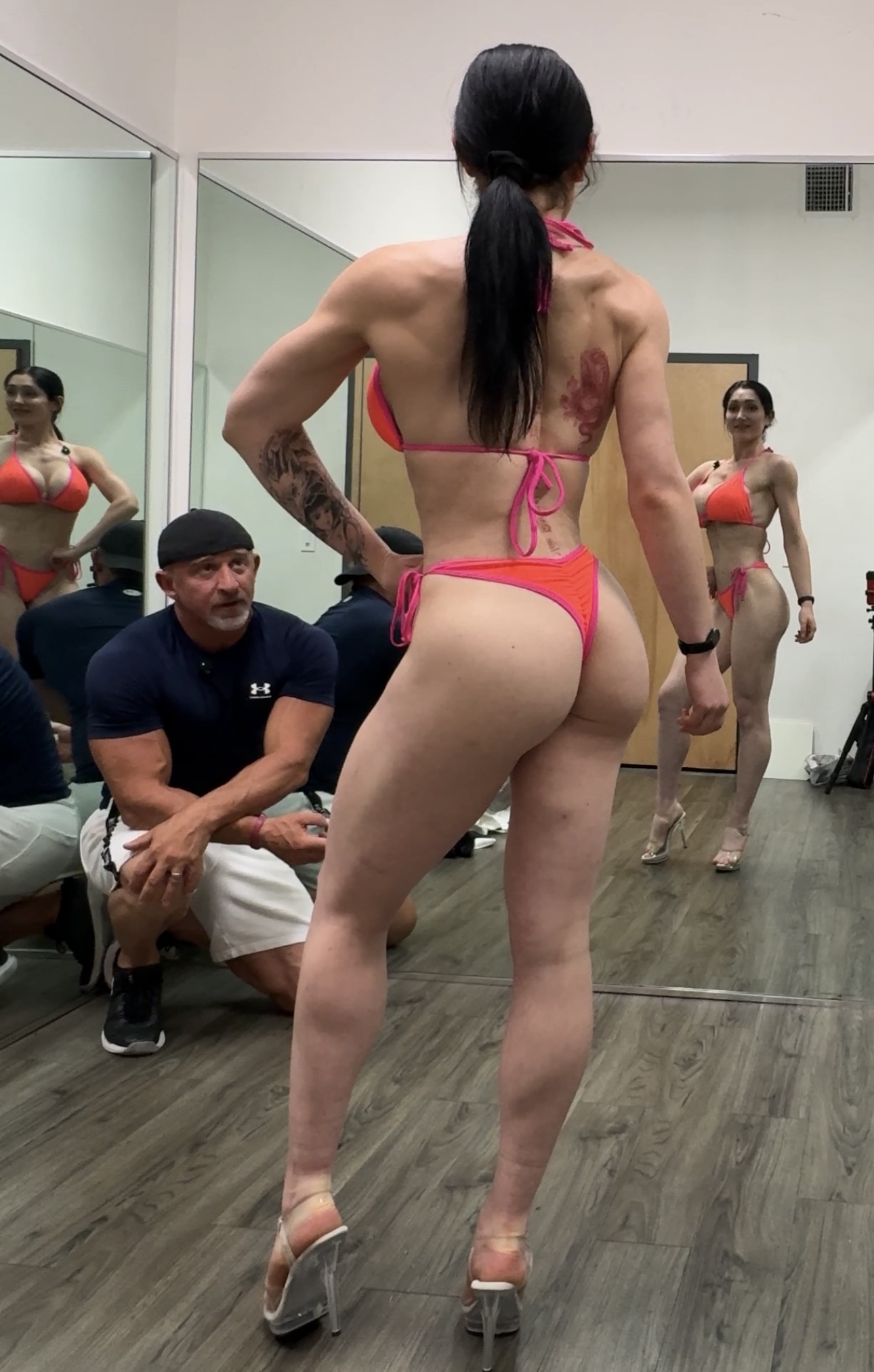
A lot of people assume they can focus on the physique first and learn posing later, but that usually isn’t a great plan. Bikini posing takes time to feel natural. Your front pose, back pose, transitions, walk, hand placement, hip position, foot pressure, facial expression, and confidence all affect how your physique looks on stage.

You can have a good physique and still not present it well.

You can also have a physique that improves dramatically just by learning how to stand, rotate, and show your shape correctly.

That’s why posing should not be saved for the last few weeks. Early posing practice helps you understand your body better, find your best angles, and build enough repetition so you’re not thinking through every move on show day. When nerves hit, people usually fall back on habits. If you’ve built good habits early, that works in your favor. If you haven’t, the stage can expose that quickly.

Your Body Will Not Look Better Every Day

This is one of the most important things to understand before your first bikini competition.

During prep, your body will fluctuate. You may look tight one day and watery the next. You may feel leaner but weigh more. You may have a great check-in one week and then feel flat or small the next. You may see changes in your digestion, sleep, strength, mood, hunger, and confidence.

That doesn’t automatically mean something is wrong.

As you get leaner, small changes become more noticeable. Food volume, sodium, water, stress, training inflammation, menstrual cycle changes, digestion, sleep, and even the timing of your progress photos can all change how you look day to day.

This is where a lot of first-time competitors start second-guessing everything. They want to change macros after one higher weigh-in. They want to add cardio because they looked soft in bad lighting. They think they’re behind because they don’t look stage-ready weeks before the show.

Prep requires objectivity. One day is not the whole story. Your coach should be looking at trends, not just emotional snapshots. That doesn’t mean you ignore what you see, but it does mean you don’t make every decision from panic.

You’ll Probably Be Leaner Than You Expected

Most first-time bikini competitors underestimate how lean they need to be.

Looking fit in normal life is not the same thing as being stage-ready. Looking good in gym lighting is not the same thing as standing under stage lights next to other competitors who are also dieted, tanned, posed, and presented.

That can be a hard reality check, especially for women who already look athletic before prep. You may feel like you’re lean, and compared to the general population, you probably are. But bodybuilding standards are different. Judges are comparing competitors within the division, and small differences in conditioning, shape, symmetry, and presentation matter.

This doesn’t mean everyone needs to be shredded to the same degree. Bikini is not judged like women’s bodybuilding or physique. But you still need enough conditioning to show the shape clearly. If there’s too much body fat covering the glutes, hamstrings, waistline, or overall structure, the look usually won’t be as competitive.

That’s why the timeline matters. If you need more fat loss than expected, a short prep can become aggressive quickly. A longer runway gives you more room to diet intelligently, keep training performance in a better place, and avoid turning the final weeks into a scramble.

The Details Will Start to Matter More

Before prep, a missed meal, inconsistent sleep, a random untracked bite, or a skipped training session might not feel like a huge deal. During prep, those things start to matter more because the margin for error gets smaller.

That doesn’t mean you need to live like a robot, but it does mean your consistency has to match the goal.

If your coach gives you macros, they need to be hit accurately. If you’re supposed to check in, the data needs to be honest. If you’re assigned cardio or steps, those numbers matter. If your posing needs work, you need to practice. If something is off, you need to communicate instead of disappearing or making your own changes.

First-time competitors sometimes think the hard part is having discipline. That’s part of it, but the bigger skill is learning how to execute repeatedly, even when the process feels boring, inconvenient, or uncomfortable.

Prep is not built from one perfect day. It’s built from stacking enough consistent days that your body has no choice but to respond.

Show Day Has More Moving Parts Than Most People Realize

Your first show day can feel like a lot, especially if you’ve never been backstage before.

There’s check-ins, tanning, makeup, hair, suit adjustments, meals, pump-up timing, waiting around, listening for class calls, staying calm, and trying to keep your body looking right while also managing nerves. Depending on the show, there may be a lot of downtime, then suddenly everything moves fast.

This is why preparation matters.

You don’t want your first time practicing your posing routine to be backstage. You don’t want your first time walking in heels to be show week. You don’t want to realize on show day that your suit doesn’t fit correctly, your tan is off, your food plan doesn’t sit well, or you don’t know when to pump up.

A good prep should help you understand the process before you’re in the middle of it. You may still be nervous, and that’s normal, but you should not feel completely lost.

Your First Show Is Also a Learning Experience

This is important.

Your first bikini competition does not have to be perfect to be valuable. Of course, you want to look your best. You want to be competitive. You want to feel proud of what you brought. But your first show also teaches you things that are hard to fully understand until you go through the process.

You learn how your body responds to dieting. You learn how you handle stress and hunger. You learn what posing feels like under pressure. You learn how you compare on stage. You learn what feedback actually matters, what needs to improve, and what it would take to come back better.

That doesn’t mean you should treat your first show casually. If you’re going to do it, do it right. But it does mean you don’t need to put the entire weight of your identity on one placing.

A first show can be the starting point for a much better long-term competitive journey, especially if you use it as feedback instead of just an outcome.

You May Need More Time Than You Think

A lot of first-time competitors choose a show too soon because they’re excited. That’s understandable, but it can create problems.

If you don’t have enough muscle yet, dieting harder won’t fix that. If you’re farther from stage condition than you thought, a short timeline may require more aggressive changes. If your posing is brand new, a few weeks of practice probably won’t be enough to make it look natural. If your lifestyle is already chaotic, prep will probably magnify that.

This is why it’s smart to get assessed before you emotionally lock into a show date.

Sometimes the answer is, “Yes, this show makes sense.” Sometimes the answer is, “You can compete, but you’d be better off choosing a later show.” And sometimes the best answer is, “Let’s build first, then prep when your body is in a better place.”

That’s not discouraging. That’s coaching.

The goal is not just to get you on stage. The goal is to help you bring a look that makes sense for where you are, where you want to go, and what the division actually rewards.

What You Should Do Before Committing to Your First Bikini Competition

Before you pick a show, you should have an honest look at your current physique, training history, nutrition consistency, lifestyle, timeline, and willingness to be coached.

You should know whether you have enough muscle to prep now or whether you’d benefit from building first. You should understand how much body fat may need to come off. You should have a realistic idea of how long prep may take. You should also be willing to hear feedback that may not match what you hoped to hear.

That last part matters.

A good coach should not hype you into a show just because you’re excited. They should help you make the best decision for your body, your timeline, and your stage look.

Your first bikini competition can be an amazing goal, but it should be approached with respect. Prep will test your structure, patience, confidence, and consistency. It will teach you a lot about yourself, but it will also show you where your habits are strong and where they need work.

If you go into it prepared, educated, and coachable, the process becomes much easier to navigate.

Conclusion

Your first bikini competition is a big step, and it’s normal to feel excited, nervous, and a little unsure. You don’t need to have everything figured out before you start, but you do need to understand what the process actually requires. Prep is more than dieting down. It’s training, nutrition, posing, communication, consistency, presentation, and making the right decisions at the right time.

If you’re thinking about doing your first bikini competition and want honest guidance before choosing a show, fill out a coaching application with USA Physique.

We’ll help you assess your current physique, timeline, habits, and readiness so you know whether prep makes sense now or whether building first would put you in a better position.

What to Expect Before Your First Bikini Competition

Your first bikini competition can feel exciting and overwhelming. This article explains what to expect before stepping on stage, including prep structure, posing, body changes, show-day details, and why honest coaching matters before choosing a show.

Your first bikini competition can feel exciting, intimidating, and confusing all at the same time. One minute you’re looking at suits, heels, stage photos, and show dates, and the next minute you’re wondering if you’re even close to ready.

That’s normal.

Most first-time bikini competitors don’t fully know what they’re getting into at the beginning. They may understand that prep involves dieting, training, cardio, posing, and getting lean, but they don’t always understand how much structure, patience, feedback, and decision-making goes into the full process.

A bikini competition is not just a weight-loss goal. It’s a judged physique sport, and that means the final look matters. Your shape, conditioning, posing, presentation, confidence, suit, tan, hair, makeup, and stage presence all play a role in how you’re seen on show day.

That doesn’t mean you need to be perfect before you start. It doesn’t mean you need to know everything. But it does mean you should understand what to expect before you commit to a show, because the more prepared you are going in, the less likely you are to panic when prep starts feeling real.

Your First Prep Will Be More Structured Than Regular Dieting

A lot of first-time competitors come into prep thinking it’s just a stricter version of dieting. In some ways, yes, it is more structured, but contest prep is not the same as a regular fat-loss phase.

In a normal diet, the goal is usually to lose weight, look better, feel better, or improve health markers. In bikini prep, the goal is to bring a specific look to stage by a specific date. That changes how decisions are made.

Your nutrition will usually become more precise. Your training has to support muscle retention and shape. Cardio and steps may increase over time. Your coach will likely be watching your weight trends, progress photos, digestion, energy, training performance, cycle changes, stress, and how your body is visually responding.

This is where first-timers can get overwhelmed, because prep is not just “eat less and move more.” It’s a process of adjusting variables while trying to preserve the look you’ve built. You’re not just trying to get smaller. You’re trying to get lean enough while still keeping shape, fullness, balance, and performance as much as possible.

That’s why guessing your way through prep can get messy fast. The more competitive the goal, the more important the details become.

You’ll Need to Practice Posing Earlier Than You Think

One of the biggest surprises for first-time bikini competitors is how much posing matters.

A lot of people assume they can focus on the physique first and learn posing later, but that usually isn’t a great plan. Bikini posing takes time to feel natural. Your front pose, back pose, transitions, walk, hand placement, hip position, foot pressure, facial expression, and confidence all affect how your physique looks on stage.

You can have a good physique and still not present it well.

You can also have a physique that improves dramatically just by learning how to stand, rotate, and show your shape correctly.

That’s why posing should not be saved for the last few weeks. Early posing practice helps you understand your body better, find your best angles, and build enough repetition so you’re not thinking through every move on show day. When nerves hit, people usually fall back on habits. If you’ve built good habits early, that works in your favor. If you haven’t, the stage can expose that quickly.

Your Body Will Not Look Better Every Day

This is one of the most important things to understand before your first bikini competition.

During prep, your body will fluctuate. You may look tight one day and watery the next. You may feel leaner but weigh more. You may have a great check-in one week and then feel flat or small the next. You may see changes in your digestion, sleep, strength, mood, hunger, and confidence.

That doesn’t automatically mean something is wrong.

As you get leaner, small changes become more noticeable. Food volume, sodium, water, stress, training inflammation, menstrual cycle changes, digestion, sleep, and even the timing of your progress photos can all change how you look day to day.

This is where a lot of first-time competitors start second-guessing everything. They want to change macros after one higher weigh-in. They want to add cardio because they looked soft in bad lighting. They think they’re behind because they don’t look stage-ready weeks before the show.

Prep requires objectivity. One day is not the whole story. Your coach should be looking at trends, not just emotional snapshots. That doesn’t mean you ignore what you see, but it does mean you don’t make every decision from panic.

You’ll Probably Be Leaner Than You Expected

Most first-time bikini competitors underestimate how lean they need to be.

Looking fit in normal life is not the same thing as being stage-ready. Looking good in gym lighting is not the same thing as standing under stage lights next to other competitors who are also dieted, tanned, posed, and presented.

That can be a hard reality check, especially for women who already look athletic before prep. You may feel like you’re lean, and compared to the general population, you probably are. But bodybuilding standards are different. Judges are comparing competitors within the division, and small differences in conditioning, shape, symmetry, and presentation matter.

This doesn’t mean everyone needs to be shredded to the same degree. Bikini is not judged like women’s bodybuilding or physique. But you still need enough conditioning to show the shape clearly. If there’s too much body fat covering the glutes, hamstrings, waistline, or overall structure, the look usually won’t be as competitive.

That’s why the timeline matters. If you need more fat loss than expected, a short prep can become aggressive quickly. A longer runway gives you more room to diet intelligently, keep training performance in a better place, and avoid turning the final weeks into a scramble.

The Details Will Start to Matter More

Before prep, a missed meal, inconsistent sleep, a random untracked bite, or a skipped training session might not feel like a huge deal. During prep, those things start to matter more because the margin for error gets smaller.

That doesn’t mean you need to live like a robot, but it does mean your consistency has to match the goal.

If your coach gives you macros, they need to be hit accurately. If you’re supposed to check in, the data needs to be honest. If you’re assigned cardio or steps, those numbers matter. If your posing needs work, you need to practice. If something is off, you need to communicate instead of disappearing or making your own changes.

First-time competitors sometimes think the hard part is having discipline. That’s part of it, but the bigger skill is learning how to execute repeatedly, even when the process feels boring, inconvenient, or uncomfortable.

Prep is not built from one perfect day. It’s built from stacking enough consistent days that your body has no choice but to respond.

Show Day Has More Moving Parts Than Most People Realize

Your first show day can feel like a lot, especially if you’ve never been backstage before.

There’s check-ins, tanning, makeup, hair, suit adjustments, meals, pump-up timing, waiting around, listening for class calls, staying calm, and trying to keep your body looking right while also managing nerves. Depending on the show, there may be a lot of downtime, then suddenly everything moves fast.

This is why preparation matters.

You don’t want your first time practicing your posing routine to be backstage. You don’t want your first time walking in heels to be show week. You don’t want to realize on show day that your suit doesn’t fit correctly, your tan is off, your food plan doesn’t sit well, or you don’t know when to pump up.

A good prep should help you understand the process before you’re in the middle of it. You may still be nervous, and that’s normal, but you should not feel completely lost.

Your First Show Is Also a Learning Experience

This is important.

Your first bikini competition does not have to be perfect to be valuable. Of course, you want to look your best. You want to be competitive. You want to feel proud of what you brought. But your first show also teaches you things that are hard to fully understand until you go through the process.

You learn how your body responds to dieting. You learn how you handle stress and hunger. You learn what posing feels like under pressure. You learn how you compare on stage. You learn what feedback actually matters, what needs to improve, and what it would take to come back better.

That doesn’t mean you should treat your first show casually. If you’re going to do it, do it right. But it does mean you don’t need to put the entire weight of your identity on one placing.

A first show can be the starting point for a much better long-term competitive journey, especially if you use it as feedback instead of just an outcome.

You May Need More Time Than You Think

A lot of first-time competitors choose a show too soon because they’re excited. That’s understandable, but it can create problems.

If you don’t have enough muscle yet, dieting harder won’t fix that. If you’re farther from stage condition than you thought, a short timeline may require more aggressive changes. If your posing is brand new, a few weeks of practice probably won’t be enough to make it look natural. If your lifestyle is already chaotic, prep will probably magnify that.

This is why it’s smart to get assessed before you emotionally lock into a show date.

Sometimes the answer is, “Yes, this show makes sense.” Sometimes the answer is, “You can compete, but you’d be better off choosing a later show.” And sometimes the best answer is, “Let’s build first, then prep when your body is in a better place.”

That’s not discouraging. That’s coaching.

The goal is not just to get you on stage. The goal is to help you bring a look that makes sense for where you are, where you want to go, and what the division actually rewards.

What You Should Do Before Committing to Your First Bikini Competition

Before you pick a show, you should have an honest look at your current physique, training history, nutrition consistency, lifestyle, timeline, and willingness to be coached.

You should know whether you have enough muscle to prep now or whether you’d benefit from building first. You should understand how much body fat may need to come off. You should have a realistic idea of how long prep may take. You should also be willing to hear feedback that may not match what you hoped to hear.

That last part matters.

A good coach should not hype you into a show just because you’re excited. They should help you make the best decision for your body, your timeline, and your stage look.

Your first bikini competition can be an amazing goal, but it should be approached with respect. Prep will test your structure, patience, confidence, and consistency. It will teach you a lot about yourself, but it will also show you where your habits are strong and where they need work.

If you go into it prepared, educated, and coachable, the process becomes much easier to navigate.

Conclusion

Your first bikini competition is a big step, and it’s normal to feel excited, nervous, and a little unsure. You don’t need to have everything figured out before you start, but you do need to understand what the process actually requires. Prep is more than dieting down. It’s training, nutrition, posing, communication, consistency, presentation, and making the right decisions at the right time.

If you’re thinking about doing your first bikini competition and want honest guidance before choosing a show, fill out a coaching application with USA Physique.

We’ll help you assess your current physique, timeline, habits, and readiness so you know whether prep makes sense now or whether building first would put you in a better position.