.jpg)
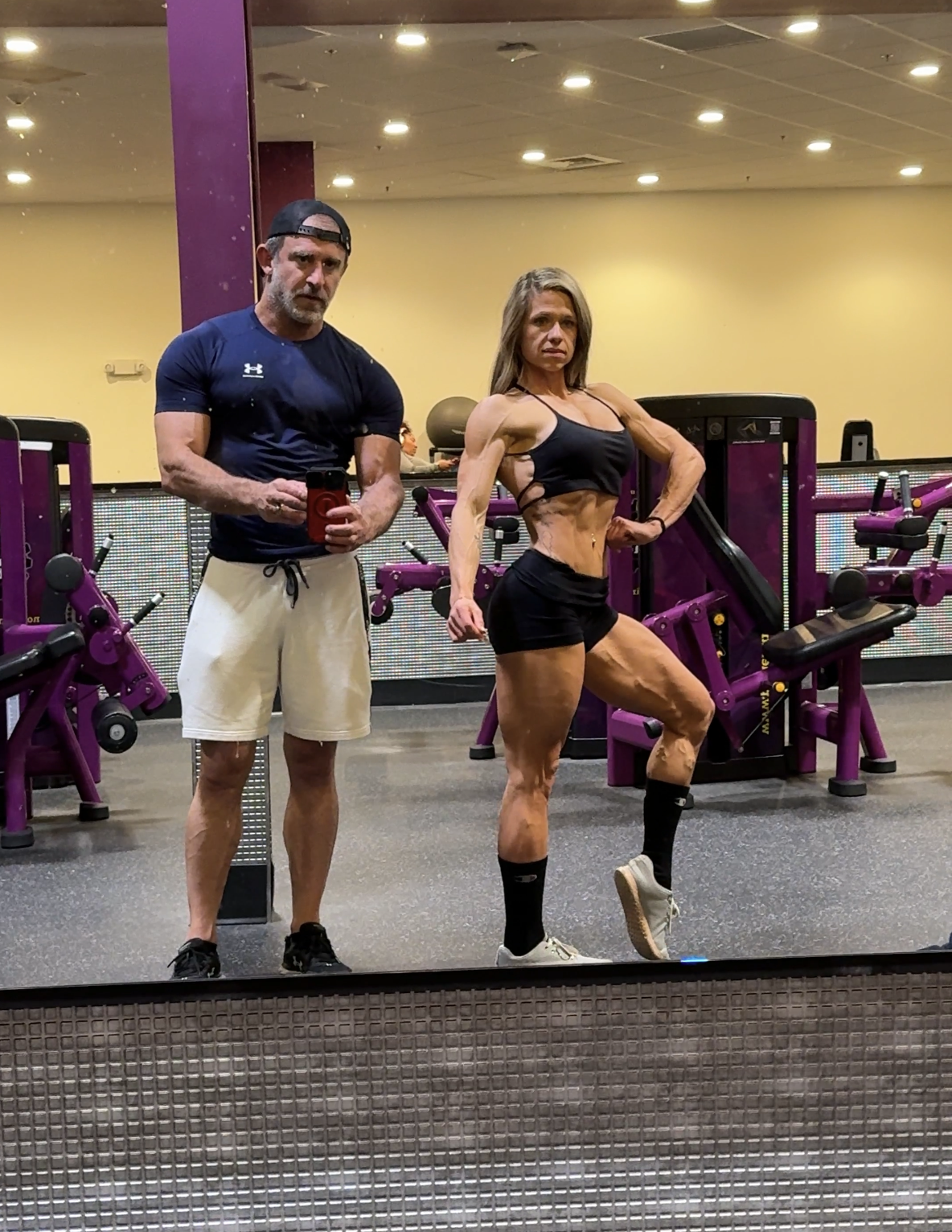
Peak week gets treated like the week that creates your stage look, and that's where competitors get themselves in trouble. The physique is built in the offseason and revealed through prep... the final week just fine-tunes it. Here's what peak week can actually change, what it can't, and why the wrong protocol can undo months of work.
Every season, the same questions show up in forums and DMs. A competitor 16 days out wants to know if a water cut and carb load are worth it because refeed days leave her bloated and she's not sure how her body will react. Another one, 10 days out, is asking for peak week tweaks to improve tightness and presentation. Someone 6 days out wants to know how to make leg and glute striations pop in the next 3 to 4 days while juggling water, sodium, potassium, depletion, and a carb load.
Different athletes, same underlying belief. They're treating peak week like the week that creates the final look. Like the right combination of water, salt, and carbs will produce the physique they've been chasing all prep.
We've coached a lot of athletes through peak week, and we've judged a lot of competitors standing on stage after theirs. So we'll tell you the same thing we tell our own athletes: peak week is an execution phase. The physique you bring to stage was built in the offseason, months or years before you ever picked a show. Prep's job is to reveal that work, stripping away body fat week by week until what you built becomes visible. Peak week just fine-tunes the reveal. It decides how well you present what prep uncovered, and nothing about it can add to what the offseason put there.
Why competitors expect peak week to do more than it can
The belief makes sense on the surface, which is exactly why it's so persistent.
Peak week variables are visible and immediate. Change your carbs and your muscles look fuller or flatter within a day. Drop your water and the scale moves. Shift your sodium and you feel tighter or softer almost overnight. Digestion, vascularity, bloating... all of it responds fast. When you've spent months grinding through prep where progress shows up in ounces per week, a week where your body visibly changes in 24 hours feels like magic.
So the logic follows: if these variables can change my look this quickly, the right combination must be able to fix whatever's still wrong.
Speed of change and size of change are two different things. Water and glycogen manipulation can swing your look a few percent in either direction. What it cannot do is replace weeks of fat loss you didn't get to. If you're holding body fat over your glutes and hamstrings on Monday of peak week, no sodium protocol on the planet makes that fat disappear by Saturday. What you'll see on stage under those lights is a slightly drier or slightly fuller version of exactly where your prep ended.
What peak week can actually change
None of this means peak week doesn't matter. It matters a lot, but only in one direction. If the conditioning is there, peak week refines it.
For a lean athlete, the final week is about four things: fullness, dryness (the look, not dehydrated), digestion, and predictability. You want muscles that are full instead of flat, skin that's tight instead of watery, a stomach that's not bloated or distended from foods your gut doesn't handle well, and above all, a plan where you already know how your body responds because nothing in it is being tried for the first time.
That last one is where most peak week plans fall apart. A good peak week has no experiments in it. The carb sources, the meal timing, the water schedule, the sodium levels... all of it should be built from data collected during prep. If refeed days bloat you, that's information your coach should have gathered and solved weeks ago, so that by show week the carb load uses foods and amounts your body has already proven it handles. Peak week is where you run the plan you've already tested. It is the worst possible week to find out something doesn't work.
When it's done right, the changes are real. A properly executed peak takes a conditioned physique and brings out the fullness and detail that were already sitting under a thin layer of water. Judges notice that. We've seen athletes move up placings because they peaked well and the competitor next to them showed up flat and depleted from an aggressive protocol they found online.
What peak week can't do
Here's the part most competitors searching for peak week tricks don't want to hear, and it's the part that matters most.
Peak week cannot create conditioning. Striations are not produced by manipulating potassium. They're what deep conditioning looks like when water is managed correctly. If the striations aren't visible at 7 days out under decent lighting, the tissue and fat levels required to show them don't exist yet, and no 5-day protocol changes that. The same goes for glute-ham tie-ins and the lower body separation judges score in Wellness and Figure. Those are prep outcomes, built through months of fat loss on top of muscle you developed in prior seasons.
From the judging table, this is obvious within seconds. We can tell the difference between an athlete who arrived lean and peaked cleanly versus an athlete who tried to peak their way into condition. The second athlete usually looks worse than she did 10 days out. Flat and depleted, or spilled over from a carb load that added fullness to a physique that still needed more fat loss, so the extra fullness only made the softer areas look worse. She took a physique that might have placed respectably at its natural state and dragged it down chasing a look that was never available that weekend.
The real risk of last-minute manipulation
This is where we get direct, because this is where athletes hurt themselves.
The competitors asking for aggressive peak week protocols usually come from one of two places. Some are self-coached and piecing a plan together from forum threads. But a lot of them have coaches, and the coach is the problem. Plenty of coaches in this industry have no real peaking process of their own. They run the exact peak week their coach ran on them, applied to every athlete on the roster regardless of body or division. Others are working off outdated protocols from a different era, back when hard water cuts and heavy depletion were treated as standard practice for everyone. And some are taking methods built for open men's bodybuilding, where the goal is maximum dryness and grainy detail on a 250-pound frame, and running them on a Bikini or Fit Model athlete whose division scores a softer, fuller look. That protocol was never designed for her physique or her judging criteria, and it shows on stage.
Whatever the source, the pattern is the same. Something feels behind, the physique isn't where anyone pictured it, and peak week becomes a rescue mission: cut water harder, deplete deeper, load bigger, stack every variable at once and hope.
Here's what all of those failures have in common: they treat peak week like a template you plug an athlete into. A real peak doesn't work that way. There are different methods that can produce a great look... front loading carbs, back loading, Progressive Linear Loading, holding water steady, slightly tapering it late. The method matters less than the match. The right approach comes from the specific competitor in front of you and the condition they're actually in when peak week begins. How much fat they're still holding, how their body responds to carbs, how their digestion behaves under prep stress, what their division rewards. Two athletes on the same roster can need completely different final weeks, and a coach running the same plan on both is guessing with at least one of them.
Untested manipulation in the final week is how athletes show up spilled, flat, cramping, or feeling terrible on the one day everything was supposed to come together. When an athlete is searching for peak week fixes at 6 days out, the actual problem is almost never peak week. They're either not ready yet...or it's coaching. The prep needed more time, the show was picked before the physique earned it, or the person running the plan doesn't understand how to peak this athlete for this division. That's a hard thing to hear a week out, but it's a much cheaper lesson at week 16 of the next prep than it is standing under stage lights wondering why the tricks didn't work.
How to think about your final week
If you're lean and your prep was managed well, your peak week should feel almost boring. Familiar foods, planned amounts, a schedule you trust, and small adjustments based on how you look each day. Boring is what predictable looks like, and predictable is what wins.
If you're not lean enough, the best decision available to you might be picking a later show, and that's a decision worth making with honest eyes instead of hopeful ones.
If you're heading into a prep or sitting somewhere in the middle of one and you're not sure which of those athletes you are, fill out a application with USA Physique. that's exactly the kind of assessment our coaching team does. We'll assess your current physique, timeline, and readiness against your division's standard, and we'll tell you what you need to hear, not just what sounds exciting. Getting that answer early is what makes peak week the easy part.